

Ever opened your fridge and felt a sudden rush of nostalgia because a favorite photo is stuck right there, smiling back at you?
That, my friend, is the magic of photo magnets – tiny, magnetized prints that cling to metal surfaces while keeping memories front‑and‑center.
But what are photo magnets, really? In simple terms, they’re ordinary photos printed on a thin, magnetic backing, turning any snapshot into a functional décor piece.
Imagine your wedding cake photo, your dog’s goofy grin, or that sunrise from last summer – all pinned to your kitchen door without a nail or tape.
Because they’re magnetic, swapping them out is a breeze; you can update the display whenever you want a fresh reminder or a seasonal brightly splash.
And they’re not just for homes – offices use them to showcase team photos, restaurants display menu specials, and teachers turn classroom walls into memory boards.
If you’re wondering about durability, most photo magnets are coated with a protective layer that resists spills, sunlight, and the occasional fridge‑door slam.
That’s why they’re a perfect blend of sentiment and practicality – you get a keepsake that also doubles as a handy reminder holder.
Curious how to pick the right size, finish, or design? How to Choose and Create Personalized Photo Fridge Magnets That Stand Out walks you through every detail, from layout tips to coating choices.
You don’t need fancy equipment – most online services print and magnetize the image for you, then ship it ready to stick.
Think about the everyday moments: a new baby’s first smile, a graduation cap, or the family pet’s mischievous pose, all visible each time you grab a snack.
So, next time you wonder what to do with that perfect photo, remember a magnet can turn it into a functional piece of art that lives right on your fridge today.
TL;DR
Photo magnets turn any favorite snapshot into a handy, magnetic keepsake that sticks to your fridge, office board, or any metal surface.
They’re cheap, customizable, and perfect for instantly sharing memories, reminders, or a quick smile every time you open a door, and they make great gifts, too, for anyone.
What Are Photo Magnets? Definition and How They Work
Ever opened your fridge and caught yourself smiling at a tiny snapshot of your dog’s goofy grin? That little piece of nostalgia is a photo magnet, and understanding what they are is easier than you think.
Definition: a photo on a magnetic backing
In the simplest terms, a photo magnet is a standard photograph that’s printed onto a thin, flexible magnetic sheet. The sheet is usually made of a flexible ferrite or a rubber‑based magnet, so it clings to any ferrous surface – think fridge doors, metal lockers, whiteboards, or even the side of a filing cabinet.
Because the magnet is integrated directly into the print, there’s no need for glue, tape, or pins. You just peel off the backing, stick it on, and you’ve got a miniature piece of art that stays put until you decide to move it.
How the magnetic layer works
The magnet itself is a collection of tiny iron oxide particles aligned during manufacturing to create a magnetic field. When you place the magnet against steel, the field pulls the two surfaces together, creating that satisfying “click.”
Most consumer photo magnets use a “soft” magnetic material, meaning they’re strong enough to hold a picture but easy enough to lift without leaving a residue. If you need extra holding power (say, for a larger 6‑inch square), you simply choose a thicker magnet grade.
There’s also a fascinating niche of research‑grade photo‑magnets that can change their magnetic strength when exposed to light. A study showed that coating a bimetallic plate with zinc‑oxide and immersing it in hydrogen peroxide creates a current loop under illumination, turning the material into a light‑activated magnet according to recent scientific research. While that’s far from the everyday fridge‑magnet you’ll buy, it illustrates how magnetic properties can be engineered at the material level.
Everyday use cases
Think about the moments you want to see every day: a baby’s first smile, a vacation sunset, or a reminder of your upcoming birthday. Slip those photos onto a magnet, and they become instant visual cues that greet you every time you reach for a snack.
Businesses love them too. A boutique can print a seasonal sale banner on a magnet and stick it on its storefront window; teachers can turn class photos into a rotating memory board; event planners hand out custom “save‑the‑date” magnets that double as a reminder.
And because the magnetic backing is flexible, you can create a collage that you rearrange whenever you feel like a fresh look. No nails, no holes – just pure, low‑effort creativity.
DIY steps to make your own photo magnets
Ready to craft your own? Follow these three quick steps:
- Pick a high‑resolution image (300 dpi works best) and decide on size – 2 × 2 in or 4 × 6 in are popular choices.
- Upload the image to an online printing service that offers magnetic backing, or buy printable magnetic sheets from a craft store. Make sure the sheet is rated “flexible” for easy removal.
- After printing, trim any excess with scissors or a craft knife, then peel the protective layer and stick it wherever you like.
Pro tip: choose a matte finish if your kitchen gets a lot of sunlight; it reduces glare and keeps the colors vibrant longer.
So, what’s the best way to keep your magnets looking fresh? Store any spares in a dry, flat container away from direct heat – that prevents the magnetic coating from warping over time.
Here’s a quick checklist you can print out and stick next to your crafting supplies:
- Image resolution ≥300 dpi
- Magnet thickness appropriate for surface
- Finish (glossy vs. matte) based on lighting
- Trim edges cleanly
- Test adhesion on a small metal spot first
Now you’ve got the know‑how to turn any photo into a functional keepsake that sticks around – literally.
Want a visual walk‑through? Check out this short video that shows the printing process from start to finish:
And just to spark your imagination, picture a collage of family vacation snaps arranged like a puzzle on your fridge, each piece easily swapped out when a new adventure rolls in.
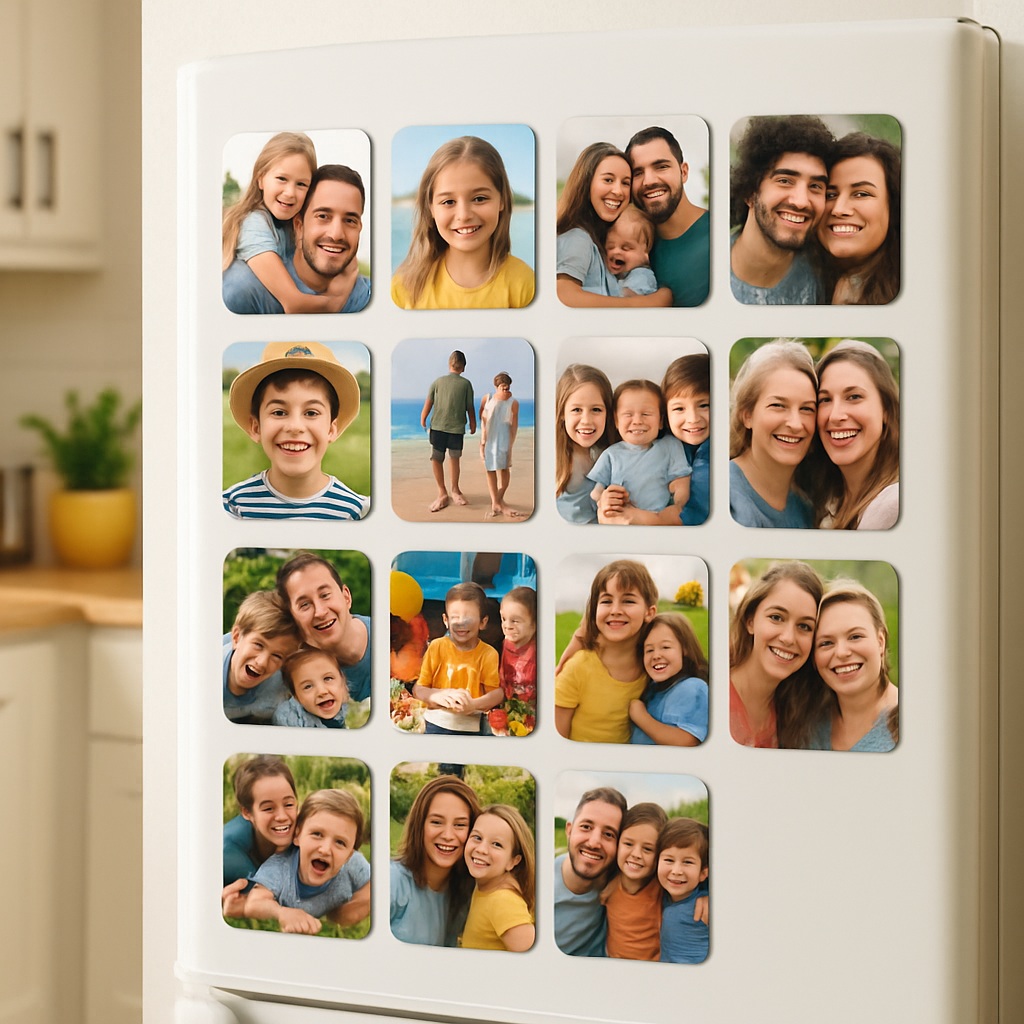
How Photo Magnets Are Made: Step-by-Step Production
1. Prepare a print‑ready file
First thing’s first – you need a file that talks the language of the printer. That means 300 dpi or higher, CMYK colour mode, and a bleed of at least 1/8 inch so the edge looks clean after it’s cut. If you’re designing a wedding favor, for example, drop in the couple’s names and a tiny icon that matches the theme; for a classroom magnet, keep the font big enough for a quick glance.
Pro tip: save the file as a PDF/X‑1a; it locks in fonts and colour profiles, which saves the printer from guessing.
2. Choose the right magnetic substrate
There are two common backs: flexible ferrite (thin, rubber‑like) and rubber‑based (a bit thicker and more forgiving). A 2 × 2‑inch souvenir magnet works well on a 0.5 mm ferrite sheet, while a 4 × 6‑inch family collage usually needs a 1 mm rubber‑based layer to stay flat on the fridge.
Think about the surface you’ll stick it to – a glossy stainless‑steel fridge door benefits from a slightly thicker magnet that won’t peel off after a few months of opening and closing.
3. Print the image onto the magnetic sheet
Most commercial shops use a wide‑format UV or inkjet printer that can feed rolls of magnetic film. The printer deposits pigment directly onto the magnetic surface, then cures it with UV light. This creates a durable, water‑resistant coating that won’t smear when you wipe the fridge with a damp cloth.
If you’re DIY‑ing at home, a high‑resolution inkjet printer with printable magnetic sheets works fine for small batches, but remember to let the ink dry fully before moving on.
4. Apply a protective finish
After the image is printed, a clear laminate – matte or glossy – is applied. Matte finish cuts glare in sunny kitchens; glossy finish makes colours pop in dimmer spaces. The laminate also adds a layer of scratch resistance, which is crucial for magnets that get handled daily.
Some providers add a UV‑blocking coating to keep colours vibrant longer, especially for outdoor signage magnets.
5. Cut to shape
Once the sheet is printed and laminated, it goes through a die‑cut or CNC router. Die‑cutting is fast for standard shapes (squares, circles, hearts), while CNC routing lets you get custom silhouettes – think a silhouette of a bride and groom for a wedding favor.
Precision matters: a clean edge prevents the magnet from catching on the fridge door and makes the whole piece feel premium.
6. Quality check & packaging
Every batch gets a quick visual inspection – look for colour banding, edge burrs, or weak magnetic spots. A magnet that doesn’t stick firmly is a deal‑breaker.
After they pass, magnets are stacked on a non‑magnetic backing, wrapped in a protective sleeve, and boxed. For bulk orders, a simple cardboard box with a window lets customers see the design without opening it.
Real‑world examples
Imagine a wedding planner who orders 200 custom magnets featuring the couple’s first dance photo. The printer follows the steps above, chooses a 1 mm rubber‑based sheet for extra grip, adds a matte finish to avoid kitchen glare, and ships them in a sleek box ready for the reception tables.
Or picture a teacher who creates a set of “Classroom Rules” magnets: each magnet shows a rule with a bright icon. Because the batch is small, they use an inkjet printer at home, a thin ferrite sheet, and a simple die‑cut. The result is a set of sturdy, kid‑proof reminders that stick to the whiteboard all year.
Actionable checklist
- Export your design as 300 dpi PDF/X‑1a with 1/8‑inch bleed.
- Pick a magnetic substrate that matches size and surface (ferrite for thin, rubber‑based for heavy‑duty).
- Choose matte or glossy laminate based on lighting.
- Confirm the printer uses UV curing for durability.
- Request a die‑cut or CNC routing file for custom shapes.
- Inspect the first few pieces for colour accuracy and magnetic strength before approving the full run.
Now you’ve got the whole production line in your head – from file prep to the moment the magnet lands on your fridge. Ready to turn your favorite photo into a magnetic memory? Just follow these steps, and you’ll have a professional‑grade product without ever needing a PhD in engineering.
Popular Uses for Photo Magnets in Home and Business
Ever glance at your fridge and feel that warm rush of memories? That’s the power of photo magnets – tiny, personal billboards that stick wherever steel lives.
At home, they’re more than just kids’ artwork. Think of a rotating gallery of family vacations, a quick‑look reminder of the next doctor’s appointment, or a seasonal collage that you swap out as the holidays change. Because the magnetic backing is thin, you can layer a 2‑inch circle on top of a 4‑inch square without any bulge, letting you create a “magnet collage” that looks intentional, not cluttered.
Kitchen command center
Most of us keep a grocery list on a sticky note that disappears after a week. Replace it with a set of photo‑magnet cards: one with a picture of the pantry layout, another with a photo of your favorite recipe. When you open the door, the visual cue does the work of a mental reminder. Add a small magnet‑backed calendar page for bill due dates – you’ll see it every time you grab a snack.
Another clever use is a “project status” magnet set. Print three magnets – “To‑Do,” “In‑Progress,” “Done” – and move a small photo of the task between them on a metal whiteboard. It’s a tactile way to track progress without digital noise.
Business branding & promotions
Small businesses love photo magnets because they’re cheap, ship easily, and become a constant visual reminder of the brand. A coffee shop can hand out a 2‑inch magnet with a photo of the new seasonal latte and the shop’s logo. When a customer sticks it on their fridge, that image nudges them to return.
Real‑estate agents often create “Open House” magnets that feature a photo of the property, the address, and a QR code. Prospects place the magnet on their fridge or filing cabinet, and the QR code stays handy for quick contact. According to Destination Decoration, many households keep dozens of magnets for everything from birthday reminders to sponsored child photos, showing how versatile the format is for personal and promotional use.
Event signage and souvenirs
Weddings, birthdays, and conferences can turn a simple photo into a keepsake. Print the bride‑and‑groom’s portrait on a 3‑inch round magnet and hand them out at the reception. Guests will stick them on their office doors, turning your celebration into free word‑of‑mouth advertising.
Trade shows love flexible die‑cut magnets that match a brand’s logo shape. The thin flex material slides into a badge holder, and attendees can pop it onto a metal display board for instant brand visibility.
Classroom & educational tools
Teachers can create “learning magnets” – a set of picture cards that show the solar system, animal habitats, or math formulas. Kids arrange them on a metal board, reinforcing concepts through hands‑on play. Because the magnets are sturdy, they survive a year of enthusiastic handling.
One practical step is to assign a “magnet of the week” in the classroom. Print a photo of a famous scientist, stick it on the whiteboard, and build a short lesson around it. The visual stays visible all week, reinforcing the topic.
Actionable checklist for any use case
- Pick a size that matches the surface – 1‑2 in for tight spaces, 4‑6 in for focal points.
- Choose matte for glare‑prone kitchens, glossy for bright display cabinets.
- Use a strong rubber‑based magnet for heavy‑duty doors, flexible ferrite for lightweight notes.
- Print a high‑resolution (300 dpi) image; add a small border to avoid edge wear.
- Test adhesion on a hidden spot before mass‑sticking.
- Refresh the collection every 3‑4 months to keep the look fresh.
So, whether you’re trying to keep your family organized, showcase your brand, or turn a school lesson into a hands‑on experience, photo magnets give you a low‑cost, high‑impact canvas that lives right where you look most often.

Customization Options: Shapes, Sizes, and Finishes
Ever stare at a blank fridge and wonder why all the magnets you see look the same? The truth is, you can shape the story you want to tell with the very form of your photo magnet.
Let’s start with shape. A square feels tidy, a circle feels playful, and a heart instantly whispers romance. CanvasChamp even lists classic square, round, heart, and rectangular silhouettes, plus the option to go custom with die‑cut shapes that match a logo or a silhouette of a beloved pet according to their product guide. Imagine a wedding favor shaped like a tiny wedding cake – guests pin it on their fridge and get a sweet reminder every time they open the door.
Shape choices that fit your vibe
•Square – clean, modern, perfect for Instagram‑style portraits.
•Round – soft and friendly; great for family snapshots or seasonal icons.
•Heart – ideal for anniversaries, Valentine’s Day, or any love‑filled memory.
•Rectangle (1.5"×4.5") – long enough for a panoramic beach shot or a mini‑menu card; PureButtons highlights this size as a sweet middle ground for logos and panoramic photos (see details).
•Custom die‑cut – think a tiny silhouette of a dog’s head, a city skyline, or a brand’s icon.
So, which shape matches the mood you’re after? If you’re aiming for a sleek, gallery‑like feel, squares or rectangles work best. For a kid‑friendly fridge, go round or heart and watch them giggle.
Size matters – not just for looks but for function
Size is where practicality meets personality. A 2×2‑inch magnet fits neatly on a crowded whiteboard, while a 4×6‑inch piece makes a bold focal point on a kitchen door. Here’s a quick way to decide:
- Measure the surface you’ll use – a narrow side of a pantry door might only handle 1‑2‑inch pieces.
- Think about the photo’s composition – a portrait works well at 2×3 inches; a landscape benefits from a rectangle like 1.5×4.5 inches.
- Consider handling – larger magnets are easier for kids to move, smaller ones stay discreet.
Pro tip: keep a ¼‑inch border around the image. It protects the edge from wear and gives the magnet a breathing room on the metal.
Finishes – the finishing touch that protects and dazzles
Even the most gorgeous photo can look dull if the finish doesn’t match the environment. CanvasChamp lists three main finishes: glossy for vibrant pop, soft‑touch matte for a buttery feel, and a rainbow‑gloss holographic option that catches light like a prism. PureButtons adds a metallic finish that lets the metal body shine through transparent artwork, plus an acetate‑metallic version for that futuristic sparkle.
When should you pick matte over glossy? If your kitchen gets a lot of sunlight, matte cuts glare and keeps colors true longer. Glossy works great in dimmer rooms or for photos you want to really sparkle, like a fireworks display. The rainbow‑gloss is a fun party‑starter for teen rooms or a promotional magnet that wants to stand out on a trade‑show table.
Here’s a short checklist to lock in the right finish:
- Identify lighting – bright sun = matte, low light = glossy.
- Consider durability – matte and UV‑cured inks resist fading; glossy can show fingerprints.
- Match brand tone – corporate logos often go matte for a professional feel; a beach vacation might shine with glossy or rainbow‑gloss.
Now that you’ve got shape, size, and finish covered, it’s time to experiment. Pull up your favorite photo, choose a shape that tells its story, size it to fit the spot you love, and pick a finish that protects it for years. You’ll end up with a magnet that’s not just a reminder, but a mini‑art piece you actually look forward to seeing every day.
Buying Guide: Choosing the Right Photo Magnet for Your Needs
Okay, you’ve already picked a photo, a shape, and a finish. Now the real question is – which magnet backing actually fits the spot you’ve got in mind?
It feels a bit like shopping for a new couch: you want something comfy, durable, and that won’t clash with your décor. The same idea applies to photo magnets, only the “cushion” is the magnetic substrate.
Step 1: Know the three main substrate families
Most online printers (and the DIY crowd) work with one of three options:
- Flexible ferrite – ultra‑thin, rubber‑like, great for small 2×2‑inch pieces.
- Rubber‑based magnetic foil – a bit thicker, gives extra grip on busy fridge doors.
- Premium UV‑cured coated sheets – adds a protective barrier that resists water, fingerprints, and fading.
Here’s a quick way to decide which one matches your lifestyle.
Ferrite for light‑weight, low‑profile swaps
Imagine you love rotating weekly family photos on a whiteboard. You don’t want a bulky magnet that lifts the board or leaves a ridge. A 0.5 mm ferrite sheet slides right onto the metal, lets you peel it off in seconds, and stays flush.
Pro tip: because ferrite is thin, it can lose a bit of pull on very smooth stainless steel. If your fridge is that sleek, you might need a slightly thicker rubber‑based sheet.
Rubber‑based for high‑traffic zones
Think about the kitchen door that gets slammed dozens of times a day. A 1 mm rubber‑based magnet holds strong, won’t peel off after a week of opening and closing, and still feels easy to lift when you want to change the picture.
Real‑world example: a teacher uses 2×3‑inch rubber‑based magnets for classroom rules. The magnets survive the daily tug‑of‑war with eager kids and never leave a residue on the metal board.
Premium UV‑cured for lasting color fidelity
If you’re printing a sunset or a vibrant birthday cake, you probably want the colors to stay punchy for years. UV‑cured coatings lock the ink in place, resist water splashes, and block UV fade.
One small bakery owner told us they switched to UV‑cured magnets for their weekly menu specials. After six months, the colors still look as fresh as the day they printed them.
Step 2: Match substrate to finish and lighting
Remember our earlier finish checklist? Matte cuts glare in sun‑lit kitchens, glossy makes colors pop in dim corners, and rainbow‑gloss adds that party sparkle.
When you pair a matte finish with a ferrite sheet, you get the ultimate low‑glare, low‑profile combo – perfect for a photo‑gallery wall in a bright dining room.
Conversely, a glossy finish on a rubber‑based magnet is the go‑to for a teen’s bedroom locker where the lighting is softer and they want the image to really shine.
Step 3: Practical checklist before you click “order”
| Feature | Best For | Notes |
|---|---|---|
| Thin ferrite (0.5 mm) | Small, frequently‑changed pics | Low profile, may need extra pull on smooth steel |
| Rubber‑based foil (1 mm) | High‑traffic surfaces, larger sizes | Stronger grip, slightly thicker feel |
| UV‑cured coated sheet | Vibrant colors, outdoor or humid areas | Water‑resistant, UV‑fade protection, premium price |
Take a minute to run through these three rows. If you can tick at least two boxes for a given substrate, you’ve probably found your match.
Step 4: Test before you commit to a bulk order
Order a single sample of each type (many printers let you do that for a few dollars). Stick it on the exact surface you plan to use – fridge door, locker, metal filing cabinet – and live with it for a couple of days.
Ask yourself: does it stay put? Does the finish show fingerprints? Does the magnet leave any “ghost” on the metal?
If the answer is “yes” to all three, go ahead and place the full order. If not, swap one variable – maybe a matte finish instead of glossy, or a rubber‑based sheet instead of ferrite.And remember, you can always mix‑and‑match within a single batch. A family collage might use ferrite for the small portrait squares and a rubber‑based magnet for a larger landscape centerpiece.
Expert tip: combine durability with personality
When you’re ordering through a service like Loveonmagnets, you can request a “double‑laminate” – a matte laminate under a thin gloss topcoat. That gives you glare‑control plus a subtle shine, and it works nicely with both ferrite and rubber‑based backings.
Finally, store any spares flat in a dry drawer. Even the best magnet can warp if it sits in a humid attic for months.
Now you’ve got a clear roadmap: know your substrate, pair it with the right finish, test a sample, and you’ll end up with a photo magnet that looks great, sticks strong, and lasts for years.
Care and Longevity: Maintaining Your Photo Magnets
Start with a simple test
Before you hang a whole batch, slap one magnet onto the exact surface you’ll use – the fridge door, a locker, or a metal whiteboard. Leave it for a couple of days. Does it still cling? No ghosting? If it passes, you’re good to go; if not, tweak the backing or finish.
Cleaning without stripping
We all love a quick wipe down, but harsh chemicals can chew through the laminate. Grab a soft cloth, a splash of warm water, and a dab of mild dish soap. Gently rub in circles; avoid abrasive pads. For glossy finishes, a little extra care prevents fingerprints from looking like permanent art.
And what about stubborn stains? A mix of equal parts water and white vinegar works wonders on kitchen grease without dulling the surface.
Protecting the finish
Glossy magnets shine, but they also show smudges. If you’re in a high‑traffic kitchen, consider a matte top coat – it cuts glare and hides fingerprints. Some folks even ask for a double‑laminate (matte underneath, gloss on top) to get the best of both worlds.
When you’re not swapping pictures, stash spares flat in a dry drawer. Keep them away from humidity; a damp attic can warp even the toughest rubber‑based sheet.
Temperature & humidity tricks
Extreme heat makes the magnetic particles relax, which can weaken the pull. That’s why you shouldn’t leave a stack of magnets in a sun‑bleached car for weeks. Likewise, high humidity can cause the laminate to delaminate. Aim for a stable environment – around 68‑72°F and under 60% relative humidity is ideal.
Do you ever wonder why a magnet that was solid last summer feels a little “floppy” in winter? The metal expands and contracts with temperature changes, subtly shifting the magnetic field. It’s normal, but if you notice a big drop in stickiness, it might be time for a fresh print.
Rotating and refreshing your collection
One of the joys of photo magnets is swapping them out whenever the mood strikes. To keep the edges from chipping, handle them by the corners, not the surface. If you have a collage, give each piece a little breathing room – too many magnets crammed together can stress the backing.
Every three to four months, give your favorite magnets a quick inspection. Look for edge wear, fading, or any “ghost” residue on the metal. A quick re‑laminate from your printer can revive a faded corner without reprinting the whole image.
Dealing with “ghost” magnets
Sometimes a magnet leaves a faint imprint on the fridge after removal. That’s usually a thin film of oil from your fingers or a slight magnetic residue. Wipe the spot with a mixture of water and a touch of rubbing alcohol, then dry. If the ghost persists, a thin sheet of clear adhesive film placed over the area can act as a barrier.
Long‑term storage hacks
Got a batch of “just in case” magnets? Lay them between two sheets of acid‑free parchment paper, then tuck the stack into a zip‑top bag. The parchment prevents static cling, and the bag keeps moisture out.
For collectors, consider a simple photo‑magnet album – a bound book with metal pages where you can slide each magnet in and out. It’s a low‑tech way to protect the finish while still displaying the memories.
Quick care checklist
- Test adhesion on the exact surface before ordering a full set.
- Clean with mild soap and water; avoid abrasive cleaners.
- Store spares flat, dry, and away from heat.
- Use matte or double‑laminate finishes in high‑traffic areas.
- Rotate magnets every 3‑4 months and inspect for wear.
- Wipe ghost spots with water‑alcohol mix; consider a barrier film.
By treating your photo magnets like little pieces of art – gentle cleaning, smart storage, and occasional check‑ins – they’ll stay vibrant and sticky for years. So go ahead, keep swapping those memories, and enjoy the smile they bring every time you open the fridge.
FAQ
What exactly are photo magnets?
Photo magnets are tiny pieces of printed artwork that have a thin magnetic backing glued or laminated directly onto the paper. You peel off the backing, stick them on any steel surface, and they stay put until you decide to move them. The magic lies in the magnetic layer – usually a flexible ferrite or rubber‑based sheet – which gives enough pull for a fridge door but is easy enough to lift without leaving residue.
Think of them as miniature, interchangeable frames that double as functional décor. Because the image and magnet are one piece, you get a clean look without any extra glue or tape.
Can I use photo magnets on surfaces other than the fridge?
Absolutely. Any smooth, ferrous metal will do – lockers, metal cabinets, whiteboards, even a stainless‑steel appliance if the magnet has enough pull. We’ve seen teachers stick them on magnetic whiteboards for classroom rules, and small businesses use them on metal display boards at trade shows. The key is to test a single magnet on the exact spot first; if it holds for a day or two, you’re good to go.
If the surface is super glossy or coated, a slightly thicker rubber‑based magnet usually provides the extra grip you need.
How long will the printed image stay vibrant?
The longevity depends mostly on the finish you choose. A matte laminate protects against glare and fingerprints, while a glossy coat boosts colour punch but can show smudges more easily. UV‑cured coatings add a layer of protection against sun‑fade, which is handy for magnets that live in sunny kitchens. With proper care – gentle cleaning and avoiding harsh chemicals – most photo magnets keep their colours vivid for years.
We recommend wiping them with a soft cloth and mild soap every few weeks. If you notice fading, a quick re‑laminate from your printer can revive the look without reprinting the whole image.
Do photo magnets damage my fridge or other metal surfaces?
Generally, no. The magnetic backing is designed to be non‑abrasive, and the surface of most magnets is smooth. The only thing you might see is a faint “ghost” – a light oil film from your fingers or a tiny magnetic residue – after you peel a magnet off. A quick wipe with a water‑and‑alcohol mix clears it right up.
Just avoid using abrasive pads or steel wool; those can scratch the metal, not the magnet.
Can I make my own photo magnets at home?
Sure thing. Grab printable magnetic sheets from a craft store, feed them through a high‑resolution inkjet printer, let the ink dry fully, then cut them to shape. For a professional finish, you can add a clear matte or glossy laminate with a laminating pouch. If you’re not into the DIY route, many online services let you upload a 300 dpi image, pick a shape, and they handle the printing and cutting for you.
Even a simple home setup can produce magnets that look just as polished as a commercial batch, as long as you follow the file prep guidelines (CMYK, bleed, high DPI).
How do I keep my photo magnets from falling off over time?
Temperature and humidity are the hidden culprits. Extreme heat can soften the magnetic particles, reducing pull, while high humidity can cause the laminate to delaminate. Aim to keep your magnets in a stable environment – around 68‑72°F and under 60 % relative humidity. If you notice a magnet getting “floppy,” give it a quick test on a different spot; sometimes the metal expands or contracts enough to affect grip.
Regularly rotating your magnets (every 3‑4 months) also gives the magnetic field a chance to reset and helps you spot any wear before it becomes a problem.
What are some creative ways to use photo magnets beyond decoration?
They’re surprisingly versatile. Use a set of small magnets as a “to‑do/in‑progress/done” board on a metal filing cabinet – move tasks around as you finish them. For families, create a weekly “magnet of the week” where each child’s artwork gets featured for seven days. Small businesses love turning a seasonal promotion into a magnet that customers stick on their fridge, turning every kitchen into a mini‑ad space.
Even event planners use them as souvenir “save‑the‑date” reminders that guests can stick on their lockers or office doors. The low cost and reusability make photo magnets a handy tool for both personal and promotional storytelling.
Conclusion
If you’ve made it this far, you probably now have a clear picture of what are photo magnets and why they’re more than just fridge clutter.
We’ve walked through the tech behind the magnetic backing, the design choices that turn a simple snapshot into a mini‑art piece, and the everyday tricks that keep them looking fresh for years.
So, what’s the next step? Grab that favorite photo, pick a shape that feels right, and let a trusted printer bring it to life – you’ll end up with a functional keepsake you can actually touch.
Remember to test the stick on your chosen surface, clean with mild soap, and rotate the collection every few months. Those tiny habits prevent “floppy” magnets and keep the colors popping.
And if you ever wonder whether a custom set is worth the investment, think of it as a personalized billboard that lives right where you stare most often – the fridge door.
Ready to turn your memories into magnetic moments? Start designing today and watch your kitchen become a gallery that greets you every time you grab a snack.
And don’t forget, a well‑chosen photo magnet can double as a quick reminder—whether it’s a grocery list, a birthday date, or a motivational quote—so you get beauty and utility in one small piece.


